
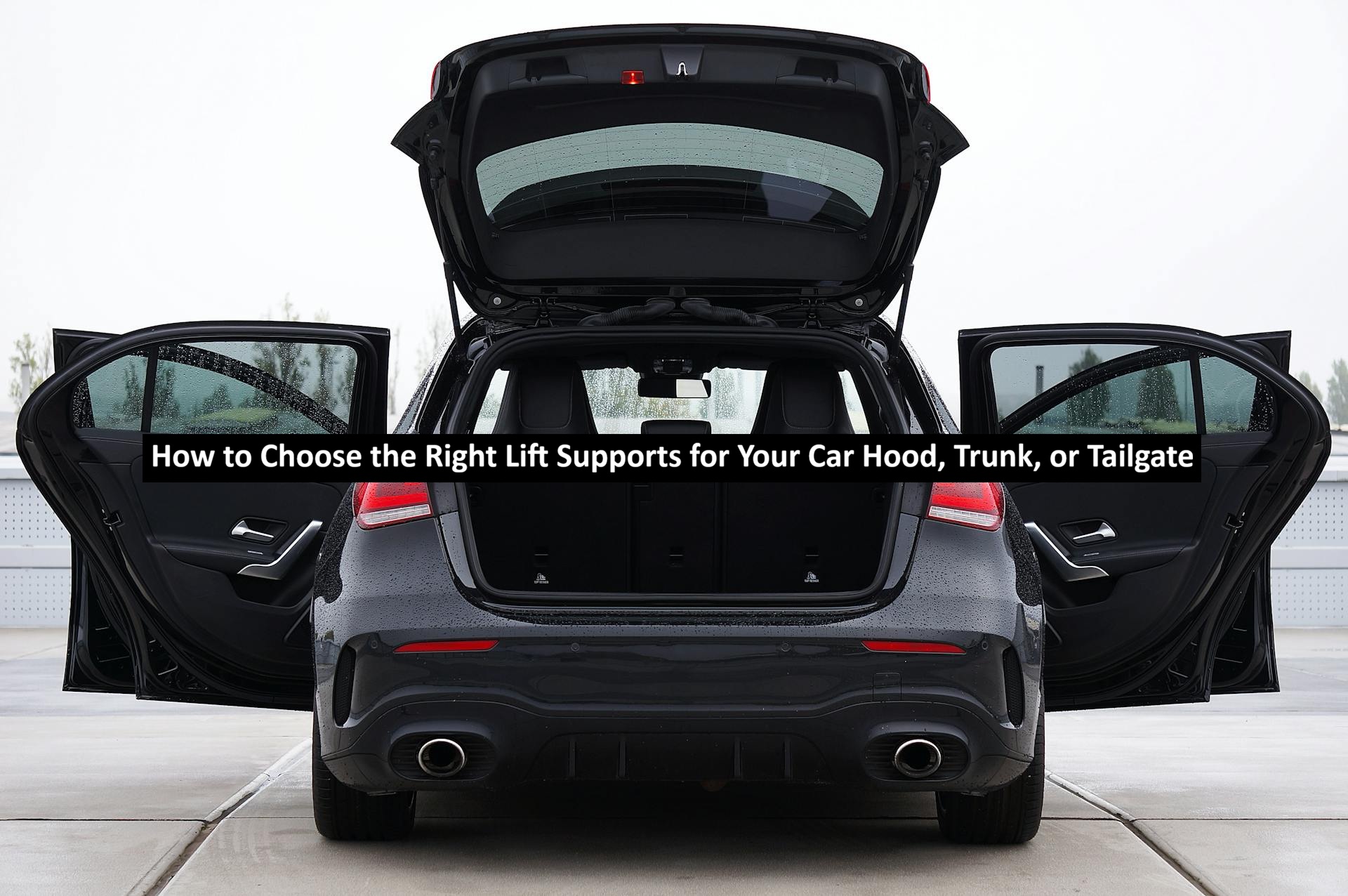
Most people don’t give their lift supports much thought until there’s a problem. When they fail, however, you’ll definitely notice, because you’ll likely be propping your hood up with a stick. Thankfully, finding the best replacement lift isn’t difficult once you know what to look for.
How Lift Supports Work
Lift supports may look simple, but they have components that should be taken into consideration when choosing a new part for your vehicle. They mainly consist of a cylinder body, piston rod, and end fittings to comprise a pressurized gas cylinder that provides hands-free support to keep your hood, trunk, or tailgate open while in use.
Over time, the gas pressure can decrease, which causes the strut to go soft and not hold the door open effectively. The first signs of failure are often your hood or trunk sitting lower than usual or becoming harder to open. Other components that may fail over time include rods becoming bent, corrosion, a torn boot, or leaking seals.
Lift supports are not universal between vehicles. The length (extended and compressed), force rating, and end fittings must all match your vehicle.
What to Look for When Choosing a Lift Support

Since lifts are unique between vehicles, there are key features and components you should look for when choosing a new part to ensure a good fit. These include:
Extended and Compressed Length
Your extended length is the full length of the lift when it’s fully open, and the compressed length is the length when fully closed. To determine these numbers, you should measure the old strut or look up the OEM specs. Even a slight difference in size can prevent full opening or result in misalignment. Measure from the center of one mounting hole to the center of the other for the most accurate numbers.
Read: Top 10 Mother’s Day Gifts That Feel Truly Personal
Force Rating
The force rating is the amount of force the strut exerts to hold the lid open. If the force rating is too low, the lid won’t stay open or open fully. If the force is too high, the lid will open too quickly or may put stress on the hinges. Your force rating should be printed on the strut, but if not, then you can find it by looking up your make and model number.
Keep in mind that some listings use a pair of struts, so the force is shared between both. So your total holding force is the force per strut multiplied by two.
End Fitting Type
The most common end fitting type is a ball socket, but there are others depending on your vehicle. Some have eyelet brackets or threaded ends, especially on older vehicles. The most common sizing is 10 mm ball studs, though some larger trucks may have bigger sizes.
Rod Diameter and Body Diameter
This is less important than other features, but it is worth finding out if possible. This will ensure the strut will fit into your mounting space appropriately.
Finding the Right Part for Your Vehicle
There are a couple different ways you can find the appropriate lift for your vehicle. They include:
Shop by Year/Make/Model
Most retailers allow you to search for parts based on your vehicle make and model. This is often the quickest and easiest method. Be sure to double-check your specs anyway, as some vehicle makes/models have multiple configurations. You may also be able to use your VIN number to gain information.
Find Your Specs
If you cannot find your vehicle make/model in retail systems, you can find the right lift by measuring your specs (listed above) and finding one that meets the criteria. This is often the best method if you have an older, custom, or harder-to-find vehicle.
OEM vs. Aftermarket

When choosing replacement parts, there are two main options:
OEM or Dealer Parts: These will be a guaranteed match, but they are drastically more expensive when compared to aftermarket parts.
Aftermarket Brands: Aftermarket parts are generally quality parts and reliable in terms of fit, as long as you take the time to ensure your specs match. Choose a known aftermarket brand.
Installation Tips
Replacing your lift strut doesn’t have to be a hard job if you have the right tools and you take your time. Here are some tips to get it done right:
Tools
You will need some basic tools to complete the job. These usually include a trim clip remover or flathead screwdriver and needle-nose pliers.
Safety
Have a second person to hold the trunk or hood open for you while you work, or use a support rod. A failing strut can give out entirely at any time and could lead to injury.
Removal
To remove the existing lift, press the retaining clip tab on the ball socket and pull your strut off each of the ball studs. In most cases, you won’t need tools for this portion.
Installation
Snap your new strut into place by putting it into each ball stud. You’ll hear/feel a click when you’ve done this correctly. Test your work by opening and closing the door at full extension to be sure it holds without assistance. If the door doesn’t stay open, check for proper installation or be sure the ball studs themselves aren’t bent or stripped.
Conclusion
Choosing the right lifts and strut hardware for your vehicle isn’t difficult when you know the right specs for your make and model. Be sure to check all parts closely to avoid misalignment or improper fit.